Search This Blog

Tuesday, 12 April 2016

DID ROTHSCHILDS ASSASSINATE THREE AMERICAN PRESIDENTS?


                    DID ROTHSCHILDS ASSASSINATE THREE AMERICAN PRESIDENTS?

                             An interesting piece of conspiracy theory, It could almost be true


                  US PRESIDENTS MURDERED BY ROTHSCHILD BANKERS


                                                                                Jacob Rothschild

                  JFK KILLED AFTER SHUTTING DOWN ROTHSCHILDS' FEDERAL RESERVE


                 THE PRESIDENTS WHO SHUT DOWN ROTHSCHILDS


                 ROTHSCHILD FAMILY


                FIVE LESSER KNOWN FACTS


                ROTHSCHILDS PROPERTIES IN THE HOME COUNTIES


OUR PENCHANT FOR BARE BOTTOMS


                                Why do so many of us like bare bottoms? You tell me!

                               CAMBRIDGE STUDENTS BARE THEIR BOTTOMS


LONGEST PYTHON EVER


                                        LONGEST EVER PYTHON DIES IN MALAYSIA


                                         BURMESE PYTHON


                                        BALL PYTHON


                                       LONGEST SNAKE EVER (as of October 2011)


Monday, 11 April 2016

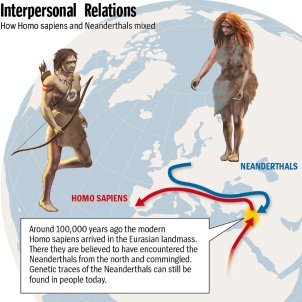
NEANDERTHAL BREEDING BARRIER


                             DNA POINTS TO NEANDERTHAL BREEDING BARRIER (BBC NEWS)


                            ANCIENT DNA AND THE NEANDERTHALS (SMITHSONIAN)


                            WHY AM I  A NEANDERTHAL?


                             NEANDERTHAL: 99.5% HUMAN


My favourite boyfriend!

Sunday, 10 April 2016

THE CASE AGAINST ASSAD


        I talked today in Edinburgh with an insightful young Frenchman who doesn't believe too much of the propaganda meted out by the French government because he suspects that it is too extremely stated. He, for example, said that he couldn't believe that the ultra-charming President Assad of Syria is war criminal, and wouldn't be able to do so without seeing more definite evidence which would back up the French government's assertions.

        So here goes, thanks to Scott F's prolific efforts! The French government would appear to be correct, if only in this particular instance---- The French authorities appear to have very extreme views on various other sensitive topics and, according to the gentleman I talked to today, many French citizens feel constrained from talking honestly together about these sorts of issues.


       HUMAN RIGHTS VIOLATIONS DURING THE SYRIAN CIVIL WAR


       SYRIAN ARMED FORCES


      UNCOVERING HUMAN RIGHTS ABUSES IN SYRIA


      BATTLE OF ALEPPO


      BARREL BOMBS


      INDUSTRIAL SCALE KILLING


      REFUGEES OF THE SYRIAN CIVIL WAR


      SYRIA AND ISIS COMMITTING WAR CRIMES, SAYS UN


      GROSS VIOLATIONS


      THE STORY OF THE CONFLICT


      FACING DOWN REBELLION (ASSAD)


     SMUGGLED SYRIAN DOCUMENTS


      UN IMPLICATES ASSAD


      CIVIL UPRISING PHASE


      TOWARDS ANARCHY


      ROJAVA CONFLICT


      HUMAN RIGHTS IN SYRIA


      YPG-SYRIAN RELATIONS


      KURD'S POLICY


      KURDS IN SYRIA


PARIS MAY, 1968, and how about a Scottish or British July during 2016?


                                      HOW ABOUT A SCOTTISH JULY DURING  2016?

                                                  OR MAYBE EVEN A BRITISH ONE?

                                                        (PEACEFUL, OF COURSE)

This is a call for action in response to the Austerity and Eugenics programs which are effecting the mental health of our nation


                                          EVENTS DURING MAY 1968 IN FRANCE
                                           

Student strikes[edit]

Following months of conflicts between students and authorities at the Paris University at Nanterre, the administration shut down the university on May 2, 1968.[5] Students at the Sorbonne University in Paris met on May 3 to protest against the closure and the threatened expulsion of several students at Nanterre.[6] On Monday, 6 May, the national student union, the Union Nationale des Étudiants de France (UNEF)—still the largest student union in France today—and the union of university teachers called a march to protest against the police invasion of Sorbonne. More than 20,000 students, teachers and supporters marched towards the Sorbonne, still sealed off by the police, who charged, wielding their batons, as soon as the marchers approached. While the crowd dispersed, some began to create barricades out of whatever was at hand, while others threw paving stones, forcing the police to retreat for a time. The police then responded with tear gas and charged the crowd again. Hundreds more students were arrested.
Wall slogan in a classroom
"Vive De Gaulle" is one of the graffiti on this Law School building.
University of Lyon during student occupation, May–June 1968
High school student unions spoke in support of the riots on 6 May. The next day, they joined the students, teachers and increasing numbers of young workers who gathered at the Arc de Triomphe to demand that:
  1. all criminal charges against arrested students be dropped,
  2. the police leave the university, and
  3. the authorities reopen Nanterre and Sorbonne.
Negotiations broke down, and students returned to their campuses after a false report that the government had agreed to reopen them, only to discover the police still occupying the schools. The students now had a near revolutionary fervor.
On Friday, 10 May, another huge crowd congregated on the Rive Gauche. When the Compagnies Républicaines de Sécurité again blocked them from crossing the river, the crowd again threw up barricades, which the police then attacked at 2:15 in the morning after negotiations once again floundered. The confrontation, which produced hundreds of arrests and injuries, lasted until dawn of the following day. The events were broadcast on radio as they occurred and the aftermath was shown on television the following day. Allegations were made that the police had participated, through agents provocateurs, in the riots, by burning cars and throwing Molotov cocktails.[7]
The government's heavy-handed reaction brought on a wave of sympathy for the strikers. Many of the nation's more mainstream singers and poets joined after the heavy-handed police brutality came to light. American artists also began voicing support of the strikers. The major left union federations, the Confédération Générale du Travail (CGT) and the Force Ouvrière (CGT-FO), called a one-day general strike and demonstration for Monday, 13 May.
Well over a million people marched through Paris on that day; the police stayed largely out of sight. Prime Minister Georges Pompidoupersonally announced the release of the prisoners and the reopening of the Sorbonne. However, the surge of strikes did not recede. Instead, the protesters became even more active.
When the Sorbonne reopened, students occupied it and declared it an autonomous "people's university". Public opinion at first supported the students, but quickly turned against them after its leaders, invited to appear on national television, "behaved like irresponsible utopianists who wanted to destroy the 'consumer society.'"[8] Nonetheless, in the weeks that followed, approximately 401 popular action committees were set up in Paris and elsewhere to take up grievances against the government and French society, including the Sorbonne Occupation Committee. The students Daniel Cohn-Bendit and Alain Krivine had emerged as prominent figures at that time.

Workers join the students[edit]


Strikers in Southern France with a sign reading "Factory Occupied by the Workers." Behind them is a list of demands, June 1968.
In the following days, workers began occupying factories, starting with a sit-down strike at the Sud Aviation plant near the city of Nanteson 14 May, then another strike at a Renault parts plant near Rouen, which spread to the Renault manufacturing complexes at Flins in the Seine Valley and the Paris suburb of Boulogne-Billancourt. Workers had occupied roughly fifty factories by 16 May, and 200,000 were on strike by 17 May. That figure snowballed to two million workers on strike the following day and then ten million, or roughly two-thirds of the French workforce, on strike the following week.
These strikes were not led by the union movement; on the contrary, the CGT tried to contain this spontaneous outbreak of militancy by channeling it into a struggle for higher wages and other economic demands. Workers put forward a broader, more political and more radical agenda, demanding the ousting of the government and President de Gaulle and attempting, in some cases, to run their factories. When the trade union leadership negotiated a 35% increase in the minimum wage, a 7% wage increase for other workers, and half normal pay for the time on strike with the major employers' associations, the workers occupying their factories refused to return to work and jeered their union leaders.[citation needed] In fact, in the May '68 movement there was a lot of "anti-unionist euphoria,"[9] against the mainstream unions, the CGT, FO and CFDT, that were more willing to compromise with the powers that be than enact the will of the base.[1]
On 25 May and 26 May, the Grenelle agreements were conducted at the Ministry of Social Affairs. They provided for an increase of the minimum wage by 25% and of average salaries by 10%. These offers were rejected, and the strike went on. The working class and top intellectuals were joining in solidarity for a major change in workers' rights.
On 27 May, the meeting of the UNEF, the most outstanding of the events of May 1968, proceeded and gathered 30,000 to 50,000 people in the Stade Sebastien Charlety. The meeting was extremely militant with speakers demanding the government be overthrown and elections held.
The Socialists saw an opportunity to act as a compromise between de Gaulle and the Communists. On 28 May, François Mitterrand of the Federation of the Democratic and Socialist Left declared that "there is no more state" and stated that he was ready to form a new government. He had received a surprisingly high 45% of the vote in the 1965 presidential election. On 29 May, Pierre Mendès France also stated that he was ready to form a new government; unlike Mitterrand he was willing to include the Communists. Although the Socialists did not have the Communists' ability to form large street demonstrations, they had more than 20% of the country's support.[8][4]

De Gaulle flees[edit]

On the morning of 29 May, de Gaulle postponed the meeting of the Council of Ministers scheduled for that day and secretly removed his personal papers from Ã‰lysée Palace. He told his son-in-law Alain de Boissieu, "I do not want to give them a chance to attack the Elysée. It would be regrettable if blood were shed in my personal defense. I have decided to leave: nobody attacks an empty palace." De Gaulle refused Pompidou's request that he dissolve the National Assembly as he believed that their party, the Gaullists, would lose the resulting election. At 11:00 a.m., he told Pompidou, "I am the past; you are the future; I embrace you."[8]


                                                 BBC ON THIS DAY


                                                 MARXIST ARCHIVE


                                                 EQUALITY, LIBERTY, SEXUALITY! 


Friday, 8 April 2016

I'm looking for a literary agent or, better still, a publisher!


NOVEL IN PREPARATION: The Grand Oligarchs of Qinsatorix
Author: Thomas Hoskyns Leonard      Literary Assistant: Stephen Maver
In collaboration with members of the Edinburgh All Comers Writers Club
Genre: Political satire/Science Fiction
Proposed readership: Intellectually minded adults of a humorous disposition
Projected length: 80,000 words
Projected completion date: 1st November 2016
Please contact me for sample chapters on

E-mail: leonardthomas70@googlemail.com


EXCERPT


                              CHAPTER 1: THE FISH ROT FROM THE TOP DOWN

      I, the Nameless Ghost, have recently started writing a dead serious scholarly treatise which recounts a mind shattering saga of yore. While I am no longer of religious persuasion, I am living, in Anno Domini 2523, in comfortable penury with Saint Zebedee Seagull and his barking cat Apocalypse on my rocky early retirement islet in the Sea of the Marmalade Dogs in Central Europe.   My story begins over a century ago in Trystonia, the main landmass on our sister planet Qinsatorix:

The sixteen-year old Prince Adam of Eden stuck another pin into his dead sea trout.
      I must have missed the plot, he mused. Please tell me, unholy Messiah! What is the plot of my miserable life? And why are the reeking fish still swirling around my head?
      Adam, the Prince Infanta, was the splutteringly handsome, Anglo-Icarian younger son of the King Emperor and Queen Empress of Qinsatorix, a planet in the Aton star system. While intensive simulations on the Gatarmass pseudo-random number generator indicate that this planet is in some parallel universe in another dimension, the location in hyperspace of this universe relative to ours is still unclear to astrologers and astrophysicists on Planet Earth. Indeed, the pilots of European mega-ships travelling from Earth through the Shepherd of Orion black hole remain totally confused (after they've negotiated the Black Hole of the Thinking Sphinx at the far end of the Wittgenstein wormhole) until they are beamed in by the Star Nav invigilators on Qinsatorix.
      During the last two hundred thousand years or so, numerous Icarians have space-warped to Earth and back, without the benefit of mega-ships, by transposing via the Mankowitz-Teller waves. During their trips to Planet Earth, the Icarians gleaned and utilised a huge amount of knowledge, captured thousands of well-educated humans, and space-warped them back to Qinsatorix.
      The various transpositions and mega-ship voyages over the ages between Qinsatorix and Planet Earth were only made possible by the trifestium metal lining of the Wittgenstein wormhole, which was, according to legend, installed at the behest of the mighty Aleph Two. This gravity-resistant layer significantly reduces the mass of people or mega-ships travelling through the wormhole at velocities exceeding the speed of light.

During the month of Julius of Anno Domini 2418 the Inner and Outer Moons of Qinsatorix rotated in 'opposing confluence' on opposite sides of the planet. During this period, the golden-skinned Prince Infanta behaved even more childishly than usual, for example by ruffling his curly ginger hair extremely compulsively, repeatedly sniffing under his right armpit, and tickling his obloid much more frequently than was considered courteous among the aristocracy.


ABOUT THE AUTHOR: Thomas Hoskyns Leonard (the Bayesian statistician Tom Leonard) is a well-published retired Professor of Statistics who has taught at the Universities of Warwick, Wisconsin-Madison and Edinburgh and is best known for his treatise A Personal History of Bayesian Statistics, which was named John Wiley's hot article of the week during February 2014, and for Bayesian Methods, An Analysis for Statisticians and Interdisciplinary Researchers (with John Hsu, Cambridge University Press, 1999), one of his two advanced text books. In April 2014, Statslife, an online publication of the Royal Statistical Society, published an illustrated version of his invited talk to the Society about Bayesian history, and John Wiley published an interview with him subtitled The Life of a Bayesian Boy in Statistics Views during May 2014.
      In 2012 and 2013, Dr. Leonard self-published two novels on his website, entitled Grand Schemes on Qinsatorix and In the Shadows of Calton Hill. As a co-founder with the Scottish poets Scott Forster and James L.S. Carter of the Edinburgh All-Comers Writers Club, he has , since 2011, composed about eighty poems and written a collection of short stories, as well as encouraging a number of successful writers and poets. He enjoys performance poetry, and sometimes reads his poems to the Blind Poetics group in Edinburgh
      Dr. Leonard is also a public health campaigner, and the administrator of the Facebook group Mental Health Discussions Edinburgh which boasts over 1000 members worldwide. His blog averages over 14000 views a month, and addresses many diverse topics and issues. These include treatments for mental health conditions, social issues, Statistics, Eugenics, Psychiatry, mind control and MK Ultra, the oligarchs who may or may not rule the world, science fiction, poetry, literature, flash fiction, spirituality, chess, history, politics, Scottish crime, and Scottish places of interest. Dr. Leonard averages over 1500 games of international blitz chess a year on Chess.com, and actively debates social, political and spiritual issues as part of an advocacy group in his church.